The Mitochondria-Oocyte Link: How Cellular Energy Drives Egg Quality and Fertility 🥚🔋✨
When discussing fertility and family planning, the term "egg quality" is frequently used. Doctors often note that egg quality declines with age, or suggest supplements to support it. Yet, the underlying cellular biology is rarely explained: what actually determines the "quality" of a human egg?
The answer lies within the microscopic engines of cellular power: the mitochondria.
The human egg (oocyte) is the largest and most complex cell in the human body. To survive, mature, and eventually develop into a healthy embryo, it requires an astronomical amount of energy.
Let's dive into the cellular science of how oocyte mitochondria determine egg quality, why this energy production declines, and plant-aligned protocols to support mitochondrial health and optimize fertility.
The Energy Engine of the Egg: 100,000 Mitochondria 🔄🔋
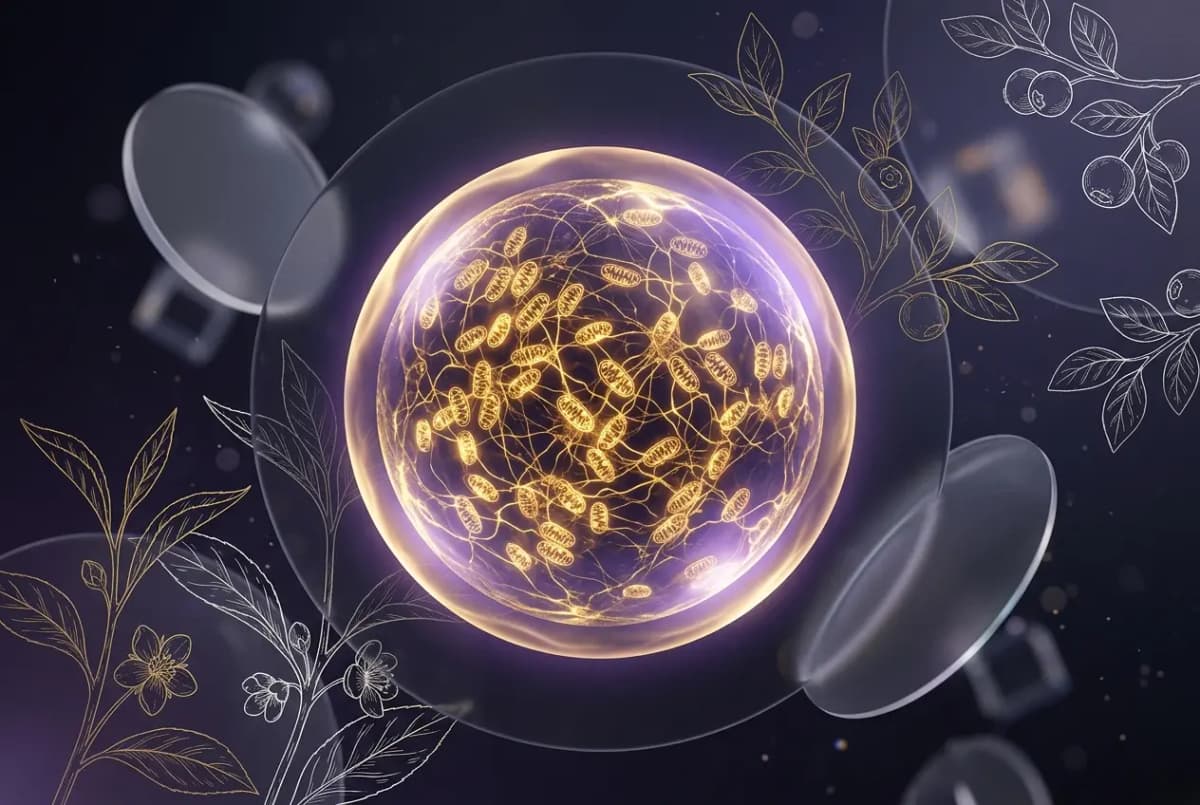
A typical human cell contains anywhere from a few hundred to a couple of thousand mitochondria. A mature human oocyte, however, contains over 100,000 mitochondria. This is the highest concentration of mitochondria found in any cell in the entire human body.
Why does a single egg cell need such a massive power plant?
Before fertilization can happen, the egg must go through a highly complex developmental process called meiosis (cell division that halves the chromosome number). During meiosis, the egg must orchestrate a precise dance:
- The Spindle Assembly: The cell builds a complex protein structure called the meiotic spindle.
- Chromosome Segregation: The spindle attaches to the egg's chromosomes and pulls them apart, dividing them perfectly.
- Fertilization Readiness: The egg must sustain itself and prepare for the energy demands of fertilization and the first critical cell divisions of the early embryo.
Building the spindle and pulling chromosomes apart is an incredibly energy-intensive process that depends entirely on Adenosine Triphosphate (ATP), the energy currency of the cell. If the oocyte's mitochondria cannot generate sufficient ATP, the chromosome separation process falters.
The Aging Oocyte & Chromosome Segregation Errors ⚠️🧬
As we age, our ovaries and egg cells undergo biological shifts. Unlike other cells in the body, eggs are formed during fetal development and remain in a state of suspended animation for decades before they mature and are ovulated.
Over these decades, the mitochondria inside the eggs are exposed to gradual oxidative stress:
- Mitochondrial DNA Damage: Mitochondria have their own unique DNA (mtDNA) which lacks the protective histones and robust repair mechanisms found in nuclear DNA. Over time, exposure to reactive oxygen species (ROS) causes mutations in the mtDNA.
- The ATP Deficit: Damaged mtDNA leads to dysfunctional respiratory chains, resulting in a significant drop in ATP production.
- Meiotic Spindle Failure: When a mature egg attempts to divide its chromosomes under an ATP deficit, the meiotic spindle becomes unstable or fails to form correctly.
- Aneuploidy & Implantation Failure: Without enough energy to pull them apart cleanly, chromosomes can break or distribute unevenly. This results in aneuploidy—an abnormal number of chromosomes in the egg. Aneuploid eggs are either incapable of fertilization, fail to implant in the uterus, or lead to early miscarriages.
Improving egg quality is fundamentally about supporting the ATP production of oocyte mitochondria and protecting their membranes from oxidative damage during the 90-day maturation cycle before ovulation.
Plant-Aligned Mitochondrial Protocols 🌿🥦
Because a follicle takes approximately 90 days to mature from its dormant state before ovulation, implementing targeted cellular support during this window is highly effective.
1. Optimize Electron Transport with Coenzyme Q10 (Ubiquinol) 🔋
CoQ10 is a naturally occurring lipid-soluble antioxidant concentrated in mitochondrial membranes, where it acts as an electron carrier in the respiratory chain to produce ATP.
- The Ubiquinol Difference: Always choose the Ubiquinol form of CoQ10 rather than Ubiquinone. Ubiquinol is the active, reduced form that is up to 8 times more bioavailable, especially as we age and our ability to reduce CoQ10 declines. Studies show that supplementing with Ubiquinol supports mitochondrial membrane potential and ATP levels in oocytes, helping to reduce chromosome segregation errors.
2. Activate SIRT1 Pathways with Resveratrol & EGCG 🍇🍵
Mitochondrial biogenesis—the creation of brand-new, healthy mitochondria—is regulated by signaling proteins called sirtuins (specifically SIRT1).
- Resveratrol: A polyphenol found in grape skins and berries, resveratrol activates SIRT1 and the transcription factor PGC-1alpha, which signals cells to synthesize fresh mitochondria.
- EGCG (Epigallocatechin Gallate): The primary antioxidant in green tea, EGCG protects mitochondrial membranes from lipid peroxidation and supports overall cellular viability.
3. Neutralize ROS with Wild Blueberries and Alpha-Lipoic Acid (ALA) 🫐
Protecting developing follicles from oxidative stress prevents damage to the delicate mitochondrial DNA.
- Anthocyanins: Wild blueberries contain exceptionally high levels of anthocyanins, which cross cellular membranes to neutralize free radicals directly.
- Alpha-Lipoic Acid: A universal antioxidant that works in both water- and fat-soluble cellular compartments, ALA recycles other antioxidants like vitamin C and glutathione, maintaining a protective shield around the oocytes.
4. Mitigate Environmental Mitochondrial Toxins 🧪❌
Endocrine-disrupting chemicals (EDCs) like Bisphenol A (BPA) and phthalates have been shown to directly disrupt mitochondrial membrane potential and induce follicular apoptosis (cell death).
- The Action: Shift away from plastic food storage containers and bottles, avoid heating food in plastics, and choose personal care products labeled phthalate-free to reduce the toxic load on your ovaries.
Chart Your Maturation Journey Privately 📊🔐
Since oocytes mature over a 3-month cycle, consistency in tracking health indicators and supplement protocols is essential:
- Log Ovulatory Biomarkers: Track cervical mucus patterns and Basal Body Temperature (BBT) to confirm strong, ovulatory cycles.
- Track Supplement Protocols: Keep a consistent log of your mitochondrial protocol (CoQ10, antioxidants) alongside your cycle patterns.
Because fertility journeys are deeply personal, data privacy is a fundamental human right.
Bloom is designed with a Local-First Architecture. All your cycle charts, ovulation markers, supplement logs, and wellness diaries are stored locally and encrypted strictly on your own device. We do not use external cloud servers or sell your reproductive data to third-party marketing companies. If you choose to enable cloud backup, it is fully secured using end-to-end encryption via Supabase, ensuring that your intimate health data remains completely private and under your exclusive control.
Disclaimer: This guide is for educational purposes only. Egg quality and fertility are complex medical areas. Consult a qualified reproductive endocrinologist or fertility specialist before starting any new supplement protocol or if you have been struggling to conceive.
Read on the go.
Stop scrolling and start syncing. Download the free Bloom app for personalized daily insights right on your phone.