The Lymphatic Pump: Why Movement Is the Key to Flushing Body Waste 🌊🧘♀️🧹
Have you ever woken up in the morning and noticed that your face looks unusually puffy, your fingers feel stiff, or your legs feel heavy and swollen?
You might notice that after a long day of sitting at a desk, your ankles look thick, or you feel sluggish and heavy throughout your entire body.
This puffiness and stiffness is a sign that your body's internal drainage system—the lymphatic system—has slowed down.
While you might know that your heart pumps blood throughout your body, you might be surprised to learn that your body's drainage system has no heart pump at all. It depends entirely on your daily physical movements to keep flowing.
Let's look at the simple science of how this plumbing system works, why sitting still causes fluid backup, and four easy daily habits to pump your lymph and flush waste naturally.
The Plumbing System with No Pump: How Lymph Works 🚰🤷♀️
Your body has two main vascular networks. The first is your cardiovascular system, which carries blood. The second is your lymphatic system, a network of tiny drainage pipes that carries a clear fluid called lymph.
Lymph is your body's cleanup crew. It picks up excess fluid, metabolic waste, proteins, and immune cells from your tissues and filters them through small stations called lymph nodes to neutralize bacteria and viruses.
Here is the key biological difference:
- The Blood System (Automatic): Your blood has a dedicated, automatic pump—your heart. Your heart beats over 100,000 times a day, pushing blood to every corner of your body without you ever having to think about it.
- The Lymph System (Manual): Your lymphatic system has no central pump. The fluid inside the drainage pipes cannot move on its own.
To push the lymph fluid up against gravity and back toward your chest where it is cleaned, the system relies on external pressure. This pressure is generated by the contraction of your muscles and the movement of your lungs.
The Backup: Why Sitting Causes Swelling and Stiffness 🪑⚠️
If you spend all day sitting still—whether you are working at a computer, driving, or relaxing on the couch—your skeletal muscles are inactive.
Without muscle movement, the manual hand pumps of your lymphatic system remain idle. The drainage pipes stop flowing, leading to:
- Fluid Pooling: Gravity pulls fluid down into your lower legs, ankles, and feet, causing swelling (edema).
- Morning Stiffness: When you lie still for 8 hours during sleep, lymph movement is minimal. This causes waste products to settle in your tissues, leaving you feeling stiff and puffy when you first get out of bed.
- Sluggish Immunity: Because lymph fluid is slow to reach the lymph nodes, your immune cells take longer to recognize and fight off germs, leaving you more vulnerable to catching colds.
Four Easy Habits to Activate Your Lymphatic Pump 🌊🧘♀️
Fortunately, stimulating your body's drainage system is incredibly easy. Incorporating these simple habits into your daily routine acts as a manual trigger to get the pumps running:
1. Legs Up the Wall (The Gravity Assist) 🧱🦶
At the end of the day, lie on your back on the floor and rest your legs vertically up a wall. Relax in this position for 10 minutes, breathing deeply.
- Why it works: Lying with your legs elevated reverses gravity. The pooled fluid in your ankles and lower legs naturally drains back toward your pelvic cavity, where your main lymphatic ducts can easily process it.
2. Deep Belly Breathing (The Diaphragm Squeeze) 💨
Take slow, deep breaths that cause your stomach to expand on the inhale and contract on the exhale.
- Why it works: Your body's largest lymphatic vessel runs straight through the center of your chest. When you take deep belly breaths, your diaphragm (the breathing muscle) moves down and physically squeezes these deep lymph ducts, pumping the fluid upward.
3. Gentle Bouncing or Heel Drops (The Lymph Shake) 🤸♀️
Spend 3 to 5 minutes doing light, gentle bounces. You can use a mini-trampoline (rebounder) or simply stand on your feet, rise up on your toes, and drop your heels firmly to the floor.
- Why it works: The vertical acceleration and deceleration of bouncing opens and closes the tiny one-way valves inside your lymph vessels, flushing the fluid throughout your entire body.
4. Dry Brushing (Manual Sweep) 🧹🌱
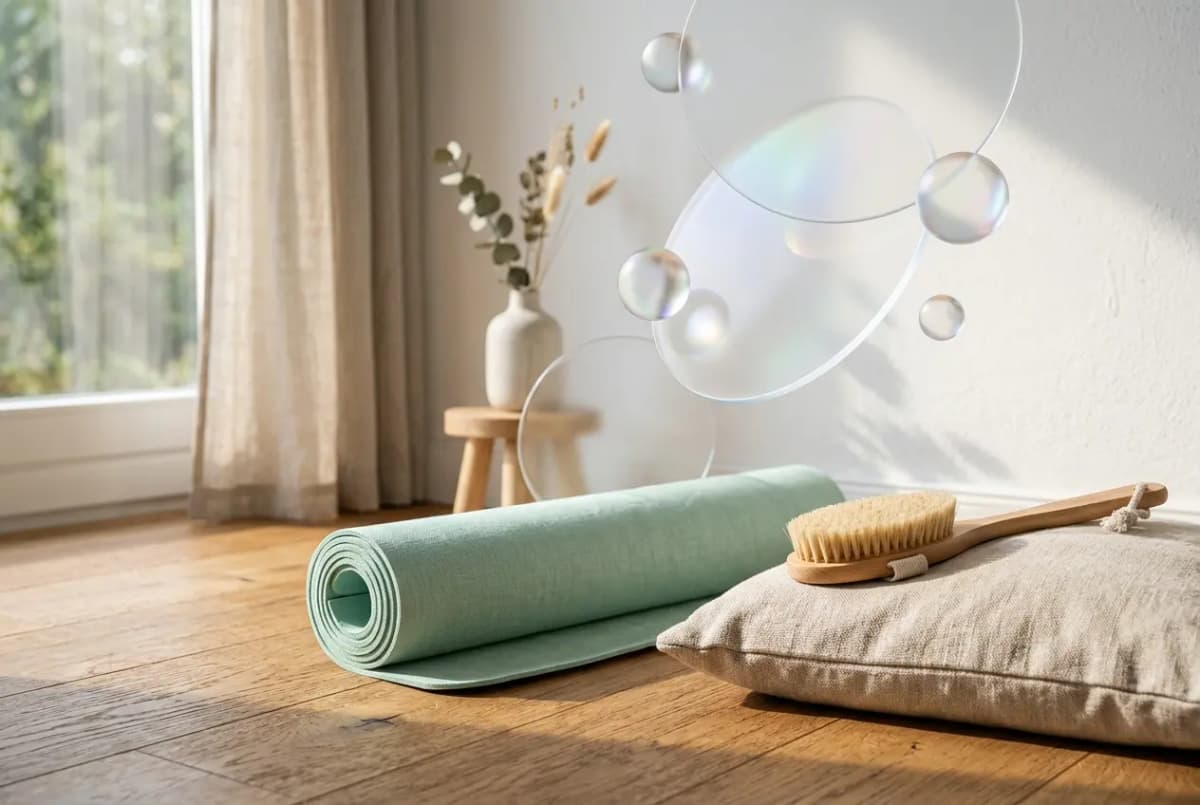
Before showering, take a natural-bristle dry brush and gently brush your dry skin using long, sweeping motions starting from your feet and hands, always brushing toward your heart.
- Why it works: Because your main lymphatic vessels reside just underneath the surface of your skin, the gentle friction of the brush manually pushes the lymph fluid in the correct direction of flow.
Track Your Activity and Puffiness Patterns Privately 📊🔐
Since lymphatic health is closely tied to daily habits, tracking your baseline helps you see what works:
- Log Morning Puffiness: Rate your facial puffiness and joint stiffness when you wake up.
- Track Movement Habits: Note if taking a 10-minute legs-up-the-wall break or performing heel drops reduces ankle swelling by evening.
Because wellness logs and physical habits contain deeply personal biological data, absolute security is non-negotiable.
Bloom is designed with a Local-First Architecture. All your activity logs, puffiness ratings, daily habits, and cycle charts are stored locally and encrypted strictly on your own device. We never upload your personal details to cloud databases or share them with third-party advertisers. If you choose to enable cloud backups, your data is protected with full end-to-end encryption via Supabase, keeping you in complete ownership of your physical health journey.
Disclaimer: This guide is for educational purposes only. Chronic swelling can be a sign of underlying heart, kidney, or circulatory issues. If you experience sudden, severe, or painful swelling in one leg, please consult a medical professional immediately.
Read on the go.
Stop scrolling and start syncing. Download the free Bloom app for personalized daily insights right on your phone.