The Vitality Barometer: What Your Libido Is Telling You About Your Health 💬🔋❤️
In conversations about health, we often talk about metrics like blood pressure, cholesterol, resting heart rate, and blood sugar. These numbers are considered the standard markers of how well our bodies are functioning.
But there is another, highly sensitive marker of overall health that is rarely discussed in clinical offices: your libido (sex drive).
Historically, libido has been viewed purely as a reproductive urge or a matter of relationship compatibility. But biologically, your sex drive is a major indicator of your systemic health—a direct reflection of your hormone levels, stress response, sleep quality, and metabolic energy.
When your libido drops, it is rarely a random failure of desire. Instead, it is your body's dashboard warning light flashing, telling you that your systemic health is asking for attention.
Let's look at the simple science of how your body manages its energy budget, why stress triggers a reproductive shutdown, and simple habits to restore your natural vitality.
The Body's Energy Budget: Why Desire is a Luxury 💸🔋
To understand libido, think of your body as running on a strict household budget.
Every day, you have a limited amount of energy to spend. Your body has non-negotiable expenses (survival costs) and discretionary expenses (luxury items).
- The Survival Costs (Non-Negotiable): Keeping your heart beating, lungs breathing, cells repairing, and managing daily stress. These must be paid first.
- The Luxury Items (Discretionary): Reproduction, hair growth, glowing skin, and libido. These are only funded if there is extra energy left over at the end of the day.
From an evolutionary standpoint, the body will only allocate energy to libido if it feels safe, well-nourished, and relaxed. If your body is starving, exhausted, or under threat, it immediately cuts the luxury budget. Your libido is turned off to redirect all remaining energy toward survival.
The Lockdowns: What Causes the Shut Down? 🔏🛡️
When your vitality dashboard light starts flashing, it is usually driven by one of two systemic blocks:
1. The Stress Lockdown (High Cortisol) 🦖🚨
When you are chronically stressed—due to work pressure, financial anxiety, or relationship tension—your brain releases the stress hormone cortisol. Cortisol puts your body into a survival lockdown.
- The Progesterone Steal: To produce high amounts of cortisol, your body literally steals the chemical ingredients it would normally use to make progesterone and estrogen (the hormones that drive mood and desire).
- The Message: Your brain thinks it is running from a predator. It reasons that now is not a safe time to conceive or spend energy on reproduction, shutting down libido completely.
2. The Energy Drain (Poor Metabolism & Sleep) 😴📉
If you are sleeping poorly or riding the sugar rollercoaster, your cells cannot produce energy efficiently. When your mitochondria (your cell batteries) are drained, your body enters conservation mode, turning off the expensive libido switch to keep you upright and functioning.
The Hormonal Team: Three Key Players 🧬✨
A healthy libido relies on a balanced team of three main sex hormones:
- Estrogen (The Cultivator): Estrogen keeps tissues healthy, supports vaginal lubrication, and promotes the positive mood and socialization required for intimacy.
- Progesterone (The Pacifier): Progesterone acts as your natural anti-anxiety agent, promoting calm, relaxation, and sound sleep.
- Testosterone (The Driver): Although often thought of as a male hormone, testosterone is crucial for women too. It is the chemical driver of physical desire, motivation, and physical energy.
If any member of this team is deficient or blocked (for example, by high stress or poor nutrition), the entire vitality dashboard suffers.
Three Easy Habits to Rebuild Your Vitality Budget 🔋🥑
If you are experiencing low libido, do not look for quick chemical fixes. Instead, focus on replenishing your body's energy budget so it feels safe to turn the luxury switch back on:
1. Feed Your Hormones with Healthy Fats 🥑🥚
Your sex hormones are literally built from cholesterol. If you eat a low-fat diet or skip healthy fats, your body lacks the raw construction materials it needs to synthesize estrogen, progesterone, and testosterone.
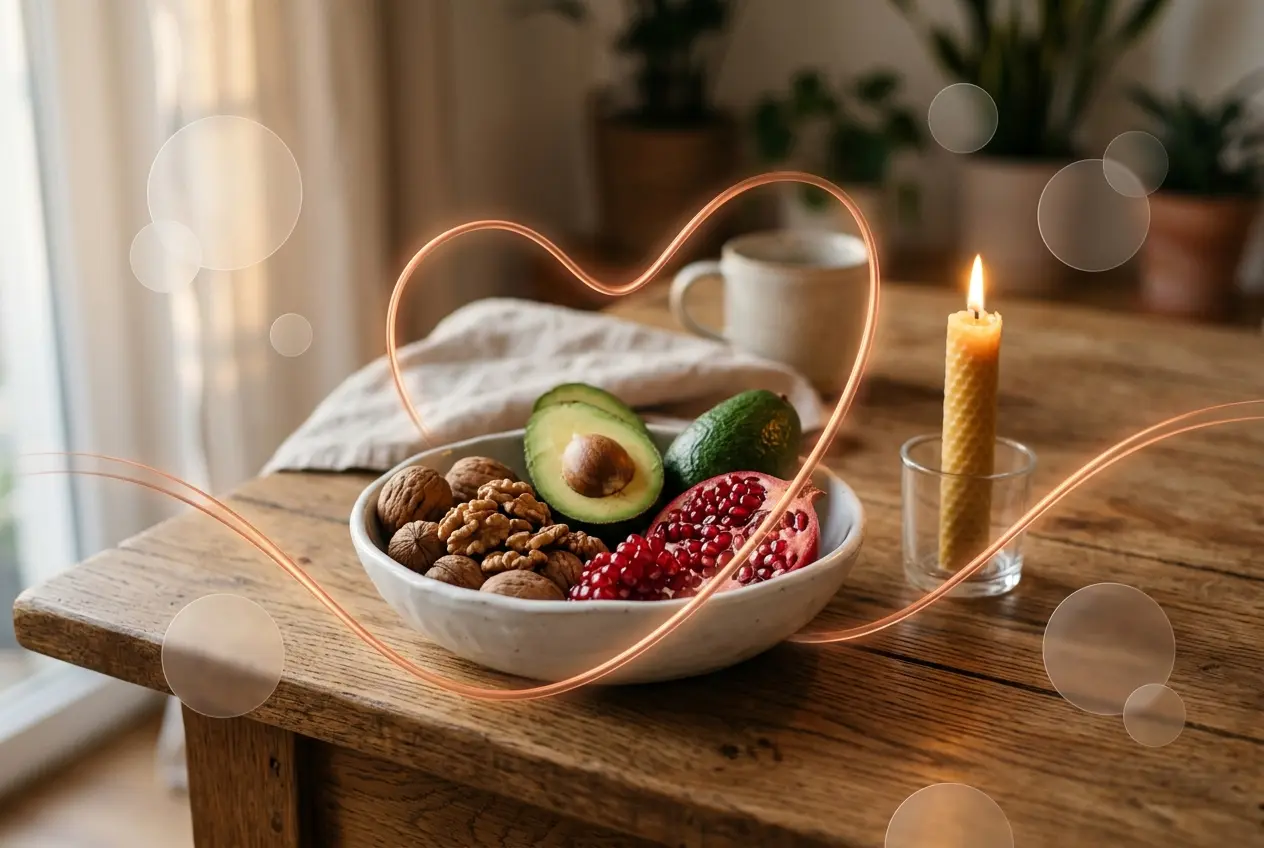
- The Protocol: Incorporate healthy fats into your meals daily. Eat wild-caught salmon, avocados, whole eggs, olive oil, and raw walnuts.
2. Prioritize Sleep to Lower Cortisol 🌅💤
Sleep is the only time your body clears cortisol and restores its hormone levels.
- The Protocol: Aim for 7 to 9 hours of quality sleep. Turn off screens 1 hour before bed to allow your brain to release melatonin, which naturally balances cortisol.
3. Incorporate Strength Training 🏋️♀️
Gentle resistance training (like lifting weights or bodyweight squats) is the most effective natural way to boost growth hormone and testosterone levels.
- Why it works: Muscle stimulation signals to your body that it needs to be strong and active, prompting your endocrine system to release natural vitality hormones.
Log Your Energy and Vitality Patterns Privately 📊🔐
Because libido fluctuates naturally throughout your cycle (usually peaking during the high-estrogen follicular phase and ovulation), tracking your baseline helps you see your normal rhythm:
- Log Stress & Energy: Chart your daily stress scores, sleep quality, and energy levels.
- Track Libido Trends: Note when your sex drive is highest and look for correlations with lower stress days, quality sleep, or ovulation.
Since tracking libido, moods, and cycles involves deeply intimate biological data, Bloom is built using a Local-First Architecture.
All your symptom diaries, stress scores, cycle logs, and wellness charts are stored locally and encrypted strictly on your own device. We never upload your personal details to cloud databases or share them with advertisers. If you choose to enable cloud backups, your data is protected with full end-to-end encryption via Supabase, keeping your health records private, secure, and entirely under your own control. 🔐🌸
Disclaimer: This guide is for educational purposes only. Low libido can be a symptom of thyroid disorders, depression, medication side effects, or nutritional deficiencies. If you experience chronic, distressing changes in desire, please consult a qualified physician or hormone specialist.
Read on the go.
Stop scrolling and start syncing. Download the free Bloom app for personalized daily insights right on your phone.