Implantation Bleeding vs. Your Period: The Cellular Science & Timing Differences 🔬🩸⏳
For anyone trying to conceive, the two-week wait between ovulation and a missed period is filled with hyper-awareness of every bodily sensation.
Among the most common sources of confusion is early spotting. When light bleeding occurs a few days before an expected period, the immediate question arises: Is this implantation bleeding, or is my period starting?
While they may appear similar at a glance, they represent entirely different physiological events. One is the start of a shedding process, and the other is the result of a microscopic embryo burrowing into your uterine wall.
Let’s dive into the cellular science of blastocyst implantation, the key clinical differences in color, flow, and cramping, and how to track your cycle signals to know the difference.
The Cellular Science of Implantation 🧫
To understand implantation bleeding, we must look at the microscopic journey of a fertilized egg.
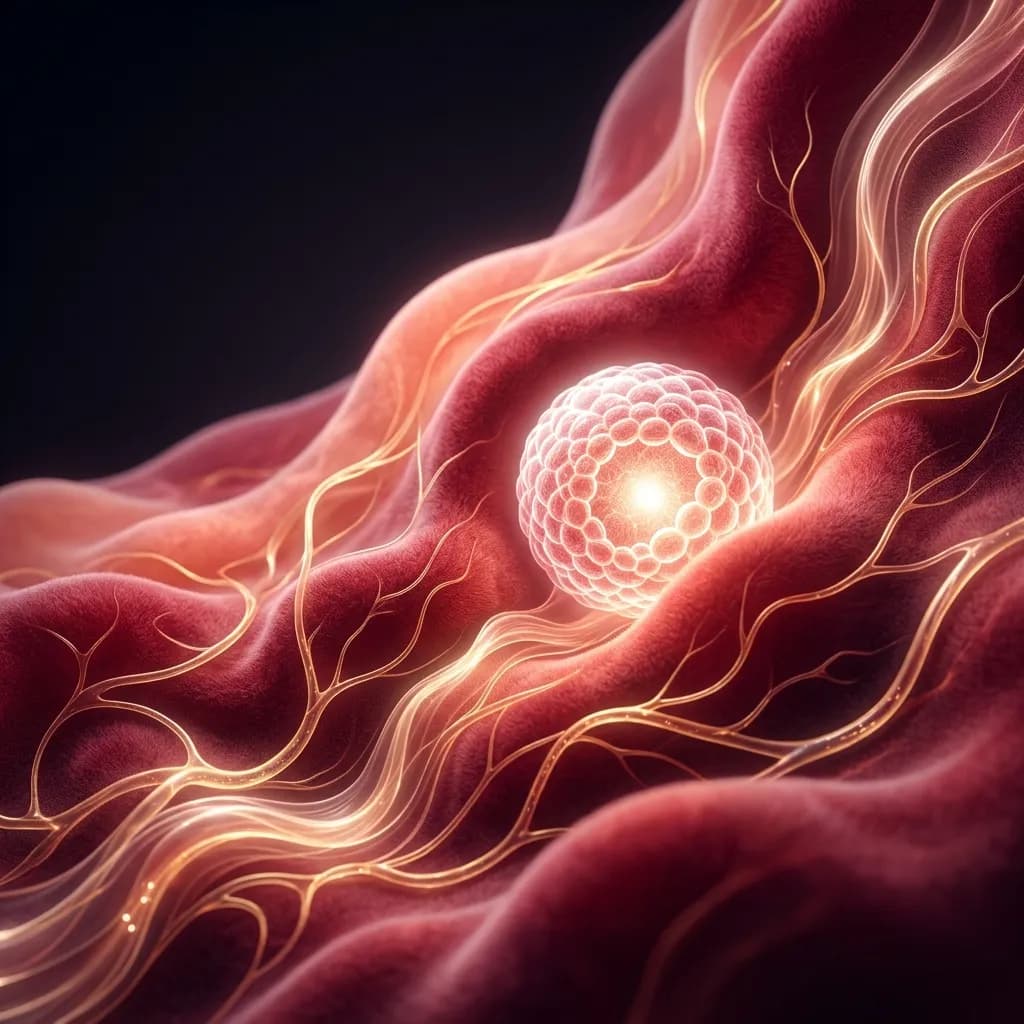
After ovulation, if fertilization occurs in the fallopian tube, the single cell divides rapidly as it travels toward the uterus, forming a multicellular sphere called a blastocyst.
Around 6 to 12 days post-ovulation (typically days 20 to 24 of a standard 28-day cycle), the blastocyst arrives in the uterus and initiates implantation:
- Adhesion: The blastocyst attaches to the surface of the endometrium (the nutrient-rich uterine lining).
- Trophoblast Invasion: The outer cell layer of the blastocyst (the trophoblast) begins to proliferate and differentiate. It secretes specialized proteolytic enzymes that act like microscopic scissors, digesting the endometrial epithelial cells.
- Vascular Breach (Micro-Hemorrhages): As the trophoblast burrows deeper to connect with the maternal blood supply, it breaches the walls of the maternal endometrial capillaries. This minor vascular breach leaks a tiny amount of blood into the uterine cavity.
This leaked blood eventually travels down through the cervix, manifesting externally as implantation bleeding.
Implantation Spotting vs. Menstruation: 4 Key Differences 📊
Because implantation bleeding is driven by localized microscopic capilliary damage, whereas a period is driven by the systemic shedding of the entire endometrium, their physical characteristics differ dramatically:
1. Volume and Flow
- Implantation Bleeding: Extremely light. It consists of minor drops, streaks, or spotting on underwear. It never develops a continuous, steady flow and does not fill a pad, tampon, or menstrual cup.
- Your Period: Starts light but quickly transitions into a steady, continuous flow of blood and endometrial tissue fragments, requiring menstrual hygiene products.
2. Color and Oxidation
- Implantation Bleeding: Usually light pink or rusty brown. Because the amount of blood is tiny, it travels slowly down the vaginal canal. By the time it exits, it has oxidized, turning brown, or it remains diluted by cervical mucus, appearing pink.
- Your Period: Typically starts or becomes bright red, crimson, or dark red, indicating active, rapid blood flow.
3. Timing and Duration
- Implantation Bleeding: Occurs about 7 to 10 days post-ovulation (roughly a week before the expected period). It is transient, lasting anywhere from a few hours up to 2 days maximum.
- Your Period: Occurs 14 days post-ovulation (unless the luteal phase is short). It is continuous and lasts between 3 and 7 days.
4. Uterine Cramping
- Implantation Bleeding: Cramping is usually very mild, faint, or felt as a light tingling or pulling sensation. It is often localized to one side of the lower abdomen.
- Your Period: Cramping is often intense, throbbing, or heavy. This is because falling progesterone triggers a surge of inflammatory prostaglandins, forcing the uterine muscle (myometrium) to contract strongly to shed the lining.
Endocrine Clues: Triphasic Temperature Curves 🌡️📈
If you track your Basal Body Temperature (BBT), your temperature chart can provide valuable clues about what is happening at the cellular level:
- Standard Biphasic Curve: In a typical cycle, your temperature is lower during the follicular phase and rises after ovulation (luteal phase) due to progesterone. If pregnancy does not occur, progesterone drops, and your temperature plunges back down as your period starts.
- The Triphasic Pattern: If implantation is successful, the newly forming placenta secretes hCG (human Chorionic Gonadotropin). hCG signals the corpus luteum to continue producing progesterone. This secondary surge of progesterone can cause a third level of temperature elevation on your chart (a triphasic curve) around 7 to 10 days post-ovulation.
- The Implantation Dip: Some pregnancy charts show a brief, one-day dip in temperature around 7 to 10 days post-ovulation, immediately followed by a sustained rise. This is thought to be driven by a transient surge of estrogen during the implantation window.
Uterine Lining & Vascular Support Nutrients 🌿
If you are actively trying to conceive, you can support a healthy endometrial lining and strong capillaries with target nutrients:
- Vitamin E (Tocopherols): Helps improve endometrial thickness and supports capillary wall strength. Plant sources include sunflower seeds, almonds, and avocados.
- Zinc: Essential for cell division, tissue repair, and progesterone receptor expression. Plant sources include pumpkin seeds, sesame seeds, and lentils.
- Vitamin C and Bioflavonoids: Support collagen synthesis and capillary structural integrity, minimizing excessive bleeding. Plant sources include bell peppers, citrus fruits, and strawberries.
Chart Your Cycle Signals Privately with Bloom 📊🔐
Distinguishing spotting from a period requires precise, historical tracking of your personal cycle baselines:
- Log Flow Characteristics: Record whether spotting remains pink/brown and transient, or transitions to red flow.
- Graph BBT Shifts: Track your waking temperatures to watch for a triphasic shift or a sustained luteal plateau past 16 days (a strong indicator of pregnancy).
Because your pregnancy tracking, cycle history, and temperature logs are deeply personal, Bloom utilizes a Local-First Architecture.
All your charts, temperature logs, mood indexes, and symptom tracking entries remain encrypted strictly on your device. We do not use cloud databases or share health metrics with third parties. Your fertility journey remains private, secure, and completely under your control. 🔐🌸
Disclaimer: This guide is for educational purposes only. A home pregnancy test is the only definitive way to confirm pregnancy. For best results, wait to test until the first day of your missed period (roughly 14 days post-ovulation) to allow hCG levels to reach detectable levels.
Read on the go.
Stop scrolling and start syncing. Download the free Bloom app for personalized daily insights right on your phone.