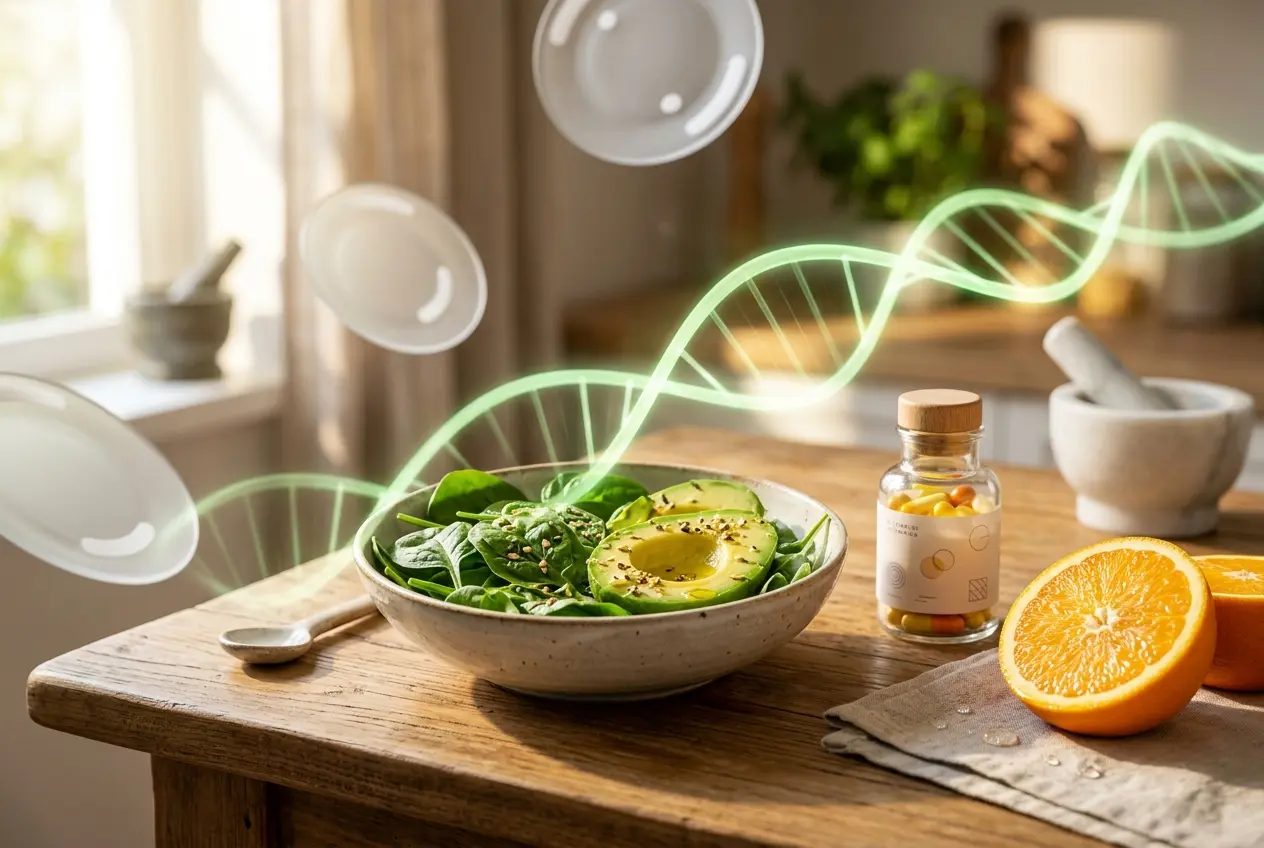
The Blueprint Vitamin: How Folate Shapes Egg Quality and Healthy Ovulation 🥚🌱🧬
When preparing for pregnancy or tracking cycles, most women hear the common medical recommendation: "make sure you take your folic acid."
We are told it is vital for preventing birth defects. But what is rarely explained is how this humble vitamin—known biologically as folate (vitamin B9)—plays a starring role long before pregnancy even begins.
In fact, folate is the foundational builder for growing healthy eggs, supporting the hormones that trigger ovulation, and ensuring a strong uterine lining.
Let's look at the simple science of why folate is the ultimate blueprint vitamin, the difference between natural folate and synthetic folic acid, and how to optimize your intake for a healthy cycle.
The 90-Day Egg Journey: Building a Cell from Scratch 🥚🏗️
To understand why folate matters for ovulation, we must first look at how eggs grow.
An egg does not mature overnight. Inside your ovaries, microscopic follicles housing immature eggs undergo a slow, complex growth phase that takes roughly 90 days before one dominant egg is finally selected for ovulation.
During these three months, the developing egg and its surrounding follicular cells go through an intense period of rapid cellular growth and energy expansion.
- The Blueprint Copy Machine: To build a new, healthy cell, your body must make an exact copy of its DNA blueprint. Every single cell division requires copying billions of DNA letters.
- Folate as the Ink & Paper: Folate is the primary nutrient your cells use to synthesize and repair DNA. Think of folate as the ink and paper for your cellular copy machine.
- The Spelling Errors: If your folate levels are low, the copy machine runs out of ink. It begins making structural typing errors in the DNA blueprint. This can lead to poor egg quality, follicles that fail to mature fully, or an inability to release the egg (anovulation).
The Vital Difference: Folate vs. Folic Acid 🍃🔬
While many doctors and supplement bottles use the terms "folate" and "folic acid" interchangeably, they are biochemically very different:
- Folate (Natural & Active): This is the natural form of vitamin B9 found in whole foods like spinach, lentils, and avocados. Your body can absorb and use it immediately.
- Folic Acid (Synthetic & Inactive): This is a man-made, synthetic version used in fortified flour, cereals, and cheap prenatal vitamins. Your body cannot use folic acid directly. It must first convert it through a multi-step process in the liver and gut into a usable form called L-methylfolate.
The Slow Copy Engine: Understanding MTHFR Simply 🚂⚠️
Why does the difference between natural and synthetic matter so much?
Nearly 50% of the population carries a common genetic variation on a gene called MTHFR.
Think of this genetic variation as having a slightly slower engine in your body's conversion machine.
- The Folic Acid Logjam: If you have this slow engine and consume high amounts of synthetic folic acid, your body struggles to convert it. The synthetic folic acid backs up in your bloodstream, blocking your cell receptors and making it harder for your cells to absorb the natural, active folate they actually need.
- The Active Folate Solution: By taking pre-converted, active folate (labeled as L-methylfolate or 5-MTHF), you completely bypass the slow conversion engine. It is like buying pre-loaded ink cartridges for your copy machine, giving your ovaries immediate access to the raw materials they need.
Three Daily Habits to Optimize Ovulation and Egg Quality 🧬🥦
To support your 90-day egg growth cycle, focus on these simple habits:
1. Choose L-Methylfolate on Supplement Labels 💊
When shopping for a prenatal vitamin or a daily B-complex, turn the bottle around and read the supplement facts list.
- Avoid: Synthetic "Folic Acid."
- Look for: "L-Methylfolate," "5-MTHF," or "Metafolin." These are the active, pre-converted forms that are highly bioavailable for your cells.
2. Start at Least 3 Months in Advance 📅
Because the follicular selection and egg maturation cycle takes 90 days, the active folate you consume today shapes the quality of the egg you will ovulate three months from now. If you are planning to conceive, start supplementing at least 3 to 6 months before trying.
3. Eat Your Green Blueprints 🥑🥗
Incorporate natural, folate-rich whole foods into your daily meals.
- Lentils & Chickpeas: A single cup of cooked lentils provides close to 90% of your daily folate needs.
- Dark Leafy Greens: Spinach, asparagus, Brussels sprouts, and broccoli.
- Avocados & Citrus: Fresh oranges, grapefruits, and avocados provide healthy fats and co-factors that improve folate absorption.
Track Your Ovulation and Supplement Habits Privately 📊🔐
Tracking your cycle helps you see the physiological signs of healthy ovulation:
- Track Cervical Mucus: Watch for clear, stretchy "egg-white" cervical mucus around mid-cycle, which indicates healthy estrogen and maturing follicles.
- Log Supplements: Record when you take your active folate to maintain daily consistency.
Because tracking ovulation metrics, basal body temperature, and prenatal supplement histories involves highly personal fertility data, Bloom utilizes a Local-First Architecture.
All your cycle charts, symptom trackers, basal temperature logs, and supplement logs are stored locally and encrypted strictly on your own device. We never upload your intimate logs to cloud databases or share them with advertisers. If you choose to enable cloud backups, your data is secured with full end-to-end encryption via Supabase, keeping your wellness records private, secure, and completely under your own control. 🔐🌸
Disclaimer: This guide is for educational purposes only. High-dose folate regimens should be supervised by a healthcare provider. If you suspect anovulatory cycles, PCOS, or carry high-risk genetic factors, consult a reproductive endocrinologist or gynecologist for personalized care.
Read on the go.
Stop scrolling and start syncing. Download the free Bloom app for personalized daily insights right on your phone.