Estrogen Decoded: The Power Hormone behind Your Glow, Mood, and Energy (And How to Balance It) ✨👑🌸
When we hear the word estrogen, we usually think of two things: periods and pregnancy. We might view it as a necessary biological hormone, but we rarely appreciate it as the ultimate multi-tasker of the female body. In reality, estrogen is your body's master architect. It dictates how sharp your memory is, how resilient your bones are, how flexible your blood vessels remain, and even how hydrated and glowing your skin looks. When estrogen is in its sweet spot, you feel energetic, clear-headed, and vibrant. When it fluctuates or declines, it can feel like the ground is shifting beneath your feet. 🪐✨ Let’s decode the science of estrogen, trace its cycle-wide rhythm, and look at holistic, plant-aligned ways to keep this power hormone balanced.
The Estrogen Family: Meeting the Three Sisters
Most people talk about estrogen as a single entity, but it is actually a class of three distinct hormones, each dominating at a different stage of your life:
- Estradiol (E2): The Queen Bee 👑 This is the strongest and most active form of estrogen during your reproductive years (from puberty to menopause). It is produced primarily by your ovaries and is responsible for your cycle, skin glow, cardiovascular health, and mental sharpness.
- Estrone (E1): The Post-Menopause Shield 🛡️ A weaker form of estrogen. It is the primary estrogen produced by your body after menopause, created mostly in your fat tissue and adrenal glands.
- Estriol (E3): The Pregnancy Anchor ⚓ The weakest form of estrogen. It is produced in massive quantities by the placenta during pregnancy to support fetal growth and prepare the body for birth.
The Cycle Rhythm: Tracing the Estrogen Rollercoaster
Estrogen is not a constant presence. It rises and falls in a predictable pattern across your cycle’s "Inner Seasons":
Cycle Phase Estrogen Behavior Your Experience
----------------------------------------------------------------------
Menstruation (Winter) Low & Quiet Reflective, Restful
Follicular (Spring) Rising Energy returning, Skin plumps
Ovulation (Summer) Sharp Peak High confidence, Glowing skin
Luteal (Autumn) Drop, then Second Peak Nesting, Progesterone balance
The Spring Rise (Follicular Phase)
As your period ends, your brain releases FSH (follicle-stimulating hormone) to mature an egg. The growing follicle releases estradiol. Your estrogen levels climb steadily, rebuilding the uterine lining, improving blood flow, and boosting energy.
The Summer Peak (Ovulation)
Right before ovulation, estrogen reaches its absolute peak. This surge tells the brain to release LH (luteinizing hormone), triggering the release of the egg. This peak is when your skin looks its absolute best, and you feel most social and confident. 👑✨
The Autumn Fall (Luteal Phase)
After ovulation, estrogen drops, rises slightly for a second, lower peak alongside progesterone, and then drops back down. If no conception occurs, the drop in both hormones triggers the shedding of the uterine lining (your period).
Beyond Fertility: Estrogen’s Master Roles
Estrogen’s influence extends far beyond your uterus. It plays vital roles in your overall wellness:
🧠 Brain Power & Mood
Estrogen is highly neuroprotective. It enhances blood flow to the brain, supports the growth of brain cells, and acts as a key co-factor in producing serotonin (the joy chemical) and dopamine (the focus/motivation chemical). When estrogen drops, brain glucose metabolism slows down temporarily, leading to "brain fog" and mood dips.
🧴 Skincare & Glow
Estrogen is your skin's best friend. It stimulates the production of collagen (which keeps skin firm), elastin (which keeps it springy), and hyaluronic acid (which keeps it hydrated). This is why estrogen declines can lead to dry skin, fine lines, or dullness.
🦴 Heart & Bone Protection
Estrogen keeps blood vessels flexible, manages healthy cholesterol levels, and plays a crucial role in bone remodeling by preventing the breakdown of bone tissue. This is why post-menopausal women face a higher risk of heart issues and osteoporosis as estrogen drops.
Signs of Estrogen Imbalance
Like any hormone, estrogen operates on a goldilocks principle: too much or too little can cause discomfort.
Signs of Estrogen Dominance (Too High relative to Progesterone)
Estrogen dominance is incredibly common, often caused by chronic stress, gut issues, or low progesterone:
- Intense breast tenderness or soreness.
- Heavy, clotted, or painful periods.
- Sudden fluid retention and bloating.
- Cyclical headaches or migraines.
Signs of Low Estrogen
Low estrogen is common in perimenopause, during high-stress states, or with extreme calorie restriction:
- Hot flashes and night sweats.
- Unexplained brain fog and forgetfulness.
- Vaginal dryness and painful intercourse.
- Very light, late, or completely missed periods.
Plant-Aligned Ways to Support Estrogen Balance
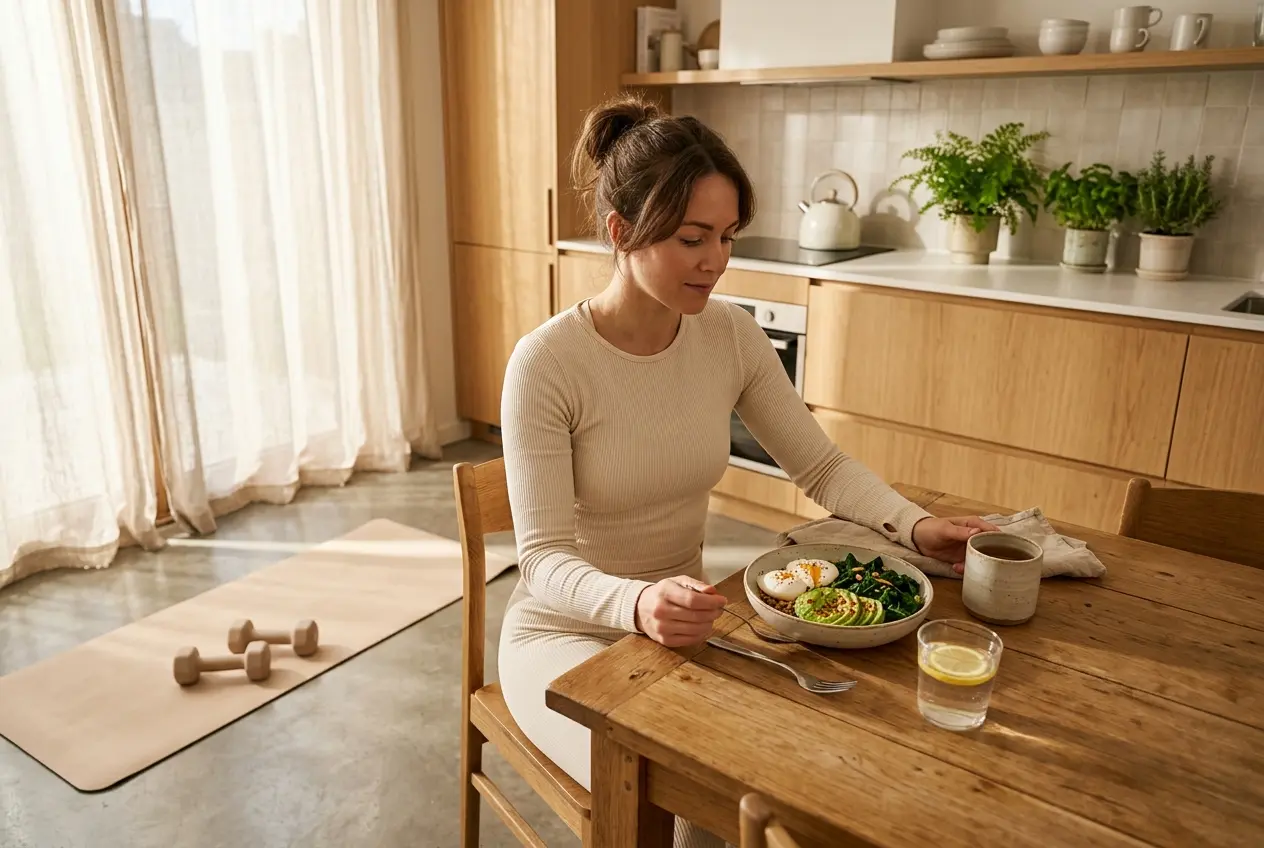
Supporting your estrogen doesn't require synthetic hormones or meat-based diets. You can help your body metabolize and balance estrogen naturally through your plate:
1. Phytoestrogens: Nature’s Regulators 🥗🌱
Phytoestrogens are plant compounds that bind weakly to estrogen receptors. They act as natural adaptogens:
- If your estrogen is too low: They act as a gentle booster.
- If your estrogen is too high: They block stronger estrogens from binding, helping to lower overall estrogen dominance.
- How to eat them: Add freshly ground flaxseeds, organic edamame, or sesame seeds to your meals.
2. Cruciferous Vegetables for Liver Detoxification 🥦
Estrogen must be processed and filtered out by your liver. Cruciferous vegetables (broccoli, Brussels sprouts, kale, cabbage) are rich in a compound called Indole-3-carbinol, which converts to DIM in the stomach. DIM helps the liver convert active estrogen into safe, inactive metabolites rather than inflammatory pathways.
3. Feed Your "Estrobolome" 🦠
The estrobolome is a specific group of gut bacteria that determines whether estrogen is excreted from your body or recycled back into your blood. To support your estrobolome:
- Eat a high-fiber, plant-rich diet. Fiber binds to metabolized estrogen and carries it out of the body.
- Ensure regular bowel movements; constipation allows estrogen to be reabsorbed, worsening dominance.
Cycle Tracking, Kept Strictly Private
Connecting the dots between your skin glow, mood shifts, and cycle dates is the best way to understand your estrogen patterns. Does your brain fog peak on cycle day 21? Does your skin break out on cycle day 26? By logging your daily symptoms in the Bloom App, you can track these shifts and take control of your cycle health. 🗓️✨
Local-First Data sovereignty
Because your hormonal logs, period dates, and symptom history are incredibly personal, Bloom is built on a Local-First Architecture.
- No Accounts: No emails, no logins, no personal identity details required.
- On-Device Encryption: All your data is encrypted and stored strictly on your device.
- No Cloud Databases: Your data never sits on a remote corporate server, meaning it can never be sold, leaked, or shared. 🔐🛡️ Your hormones are a biological symphony. By understanding the rhythm, honoring the shifts, and supporting your body naturally, you can let yourself bloom.
Read on the go.
Stop scrolling and start syncing. Download the free Bloom app for personalized daily insights right on your phone.