The Estrogen-Histamine Connection: Why Hormonal Spikes Trigger Allergies, Hives, and PMDD 🩺🧬🌸
Do you notice that your seasonal allergies, sinus congestion, skin flares, or mysterious headaches peak at very specific points in your menstrual cycle? For many, the days leading up to ovulation or the week before a period (the late luteal phase) bring a sudden wave of hives, itching, brain fog, or intense irritability that seems to mimic PMDD (Premenstrual Dysphoric Disorder).
This is not a coincidence, nor is it a random collection of unrelated symptoms. It is the result of a powerful, bidirectional feedback loop between estrogen and histamine.
Understanding how these two chemicals interact at the cellular level is a game-changer for managing cyclical inflammation, mood swings, and immune sensitivities. Let's dive into the biochemistry of the estrogen-histamine loop, why normal clearance fails, and plant-aligned strategies to restore balance.
The Bio-Cellular Feedback Loop: Estrogen & Mast Cells 🔄🧪
Histamine is best known as the chemical responsible for allergy symptoms. It is stored inside mast cells, which are specialized immune cells residing in tissues throughout your body, particularly in the gut, skin, lungs, and reproductive tract.
When mast cells encounter a trigger, they undergo a process called degranulation, releasing histamine and other inflammatory cytokines into the surrounding tissue.
Here is where the hormonal connection comes in:
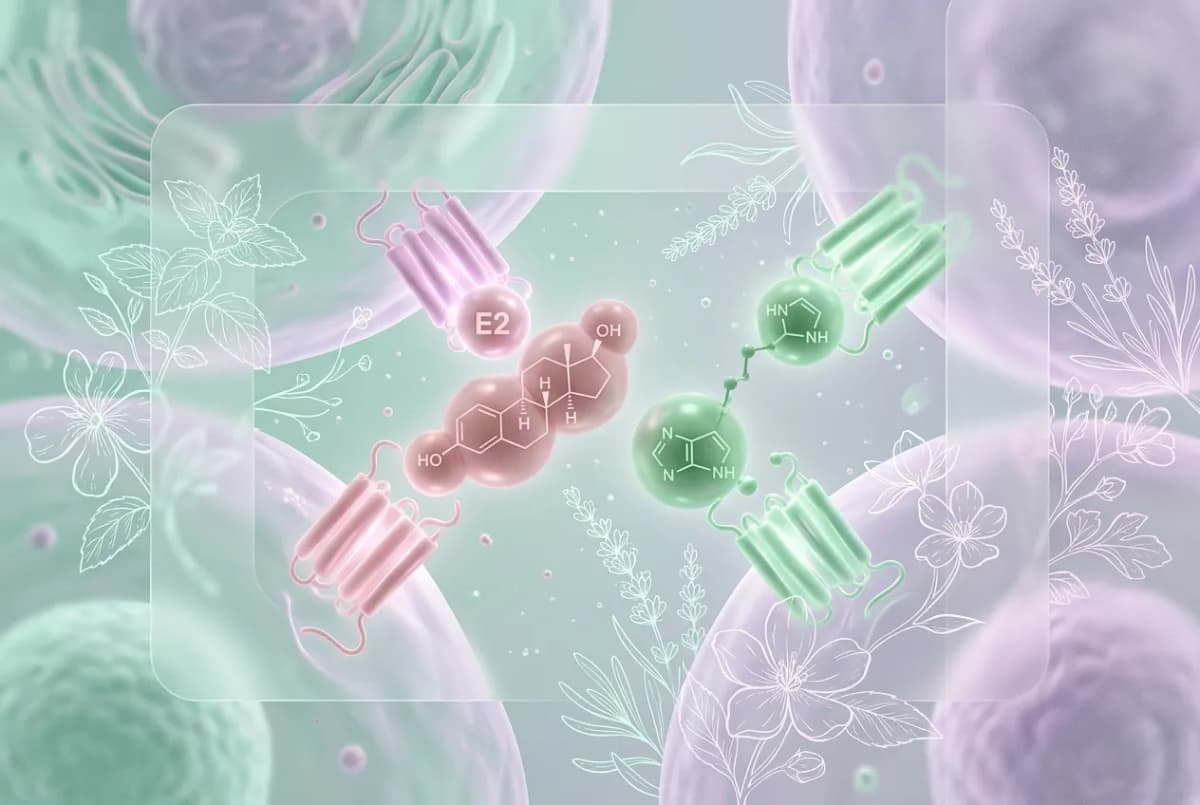
- Estrogen Stimulates Mast Cells: Mast cells express high levels of estrogen receptors (specifically ER-alpha). When estrogen levels spike—as they do right before ovulation and during the mid-luteal phase—estrogen binds to these receptors, directly triggering mast cell degranulation. This releases a flood of histamine.
- Histamine Triggers Estrogen Production: Once released, histamine binds to H1 receptors on the ovaries and the cells surrounding the follicles. This binding stimulates the ovaries to produce even more estrogen.
- The positive feedback loop: Estrogen $\rightarrow$ Mast Cell Degranulation $\rightarrow$ Histamine Release $\rightarrow$ Ovarian Stimulation $\rightarrow$ More Estrogen.
This reciprocal loop can spiral during high-estrogen phases, leading to systemic allergy-like symptoms, pelvic congestion, and neuro-inflammatory mood changes.
The Progesterone Deficit & DAO Clearance Breakdown 🛡️📊
In a balanced menstrual cycle, the body has built-in mechanisms to clear excess histamine and prevent this loop from spinning out of control. The key enzyme responsible for breaking down ingested and extracellular histamine is Diamine Oxidase (DAO).
Hormones play a direct role in regulating this clearance pathway:
- Progesterone Upregulates DAO: Progesterone, the dominant hormone of the luteal phase, has a calming effect on the immune system. It directly upregulates the expression and activity of the DAO enzyme, helping your body clear histamine efficiently.
- The Estrogen-to-Progesterone Ratio: If you have relative estrogen dominance (either high estrogen levels or insufficient progesterone production in the luteal phase), the DAO enzyme is suppressed. Without enough DAO to break down histamine, histamine builds up in the bloodstream.
- Brain Histamine & PMDD: Histamine can cross the blood-brain barrier. In the brain, histamine acts as an excitatory neurotransmitter. High brain histamine levels trigger sleep disturbances, anxiety, irritability, and severe mood fluctuations—symptoms that closely overlap with, or exacerbate, PMDD.
Plant-Aligned Mitigation Protocols 🌿🥦
To break the estrogen-histamine loop, we focus on three cellular targets: stabilizing mast cells, supporting histamine clearance enzymes, and promoting healthy liver metabolism of estrogen.
1. Stabilize Mast Cells with Quercetin 💛
Quercetin is a natural antioxidant polyphenol found in red onions, apples, and capers.
- The Action: Quercetin acts as a natural mast-cell stabilizer. It binds to the cell membranes of mast cells, preventing them from degranulating and releasing histamine when stimulated by estrogen spikes. Taking quercetin preemptively during the high-estrogen windows of your cycle can significantly reduce cyclical hives, headaches, and congestion.
2. Support DAO Activity with Vitamin B6 & Vitamin C 🍊
The DAO enzyme requires specific nutrient cofactors to function at its peak.
- The Action: Vitamin B6 (specifically in its active Pyridoxal-5-Phosphate or P5P form) is a direct cofactor for the DAO enzyme, helping to speed up the breakdown of histamine. Vitamin C is also a natural antihistamine that promotes the degradation of histamine. Integrating these cofactors supports your body's natural clearance systems.
3. Support Estrogen Clearance with Calcium D-Glucarate & Cruciferous Indoles 🥦
Lowering the total estrogen load reduces the primary trigger for mast cell activation.
- The Action: Calcium D-Glucarate inhibits beta-glucuronidase, an enzyme in the gut that can reactivate bound estrogen and reabsorb it into the bloodstream. By blocking this enzyme, it ensures that estrogen is safely excreted. Additionally, cruciferous indoles (like I3C and DIM) support the liver's cytochrome P450 pathway, directing estrogen toward its less active metabolites.
4. Practice a Cyclical Low-Histamine Approach 🍷❌
During the high-estrogen phases of your cycle (ovulation and the premenstrual week), temporarily reducing high-histamine and histamine-liberating foods can lower the overall "histamine bucket."
- Avoid/Limit: Fermented foods (kombucha, kimchi, sauerkraut), aged cheeses, red wine, processed meats, and leftovers (histamine levels build up on cooked foods as they sit).
- Focus on: Freshly cooked meats, fresh vegetables, non-citrus fruits, and herbal teas.
Track Your Hormones and Immune Symptoms Privately 📊🔐
Because the estrogen-histamine connection presents differently for everyone, tracking your cycle alongside immune symptoms is crucial for identifying your personal patterns:
- Log Allergenic Flares: Note when headaches, hives, asthma, or congestion flare up, and see if they correspond to ovulation or the premenstrual phase.
- Monitor Food Interactions: Keep track of how your body reacts to high-histamine foods at different points in your cycle.
Since health and cycle logs contain highly personal data, privacy is a fundamental right.
Bloom is built using a Local-First Architecture. All your cycle logs, symptom diaries, food tracking, and wellness notes are stored locally and securely on your own device. We never upload your biological data to third-party servers or sell your insights to advertisers. If you choose to enable cloud backups, your data is protected with full end-to-end encryption via Supabase, keeping you in complete control of your health journey.
Disclaimer: This article is for educational purposes only and does not constitute medical advice. If you suffer from severe allergic reactions, mast cell activation syndrome (MCAS), or chronic PMDD, please consult a qualified healthcare provider or immunologist.
Read on the go.
Stop scrolling and start syncing. Download the free Bloom app for personalized daily insights right on your phone.