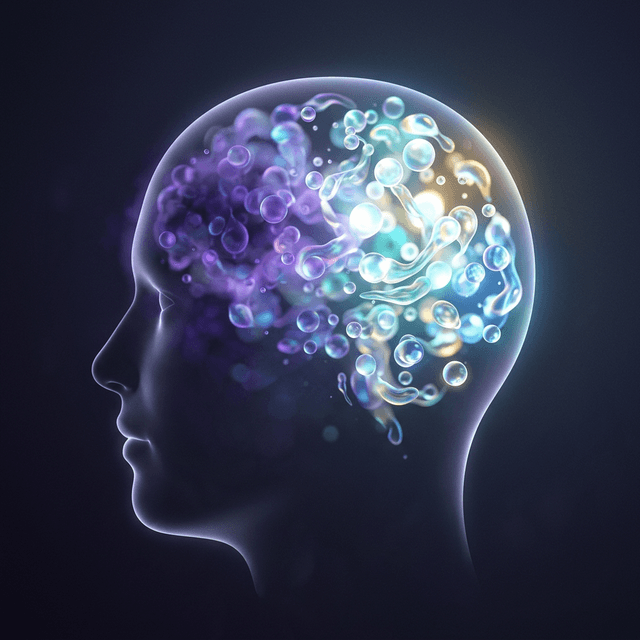
The Science Behind "Brain Fog": Hormones and Cognitive Function
We’ve all been there. You’re sitting at your desk, staring at a screen, and the words just won’t compute. You walk into a room and completely forget why you’re there. You struggle to find simple words in the middle of a sentence, or you feel a strange, heavy cloud hanging over your mental processes.
This is "brain fog." And for those with a menstrual cycle, it isn't just a result of a bad night’s sleep or too much stress. It is often a direct, biological consequence of fluctuating hormones.
For too long, women’s cognitive fluctuations have been dismissed as "emotional" or "mood-related." But the reality is that your brain is a highly hormonal organ. Receptors for estrogen and progesterone are scattered throughout the brain, particularly in areas responsible for memory, executive function, and emotional regulation.
When your hormones shift, your brain architecture literally changes.
In this deep dive, we’ll explore the neurological science of the menstrual cycle, why brain fog happens, and how you can work with your biology to maintain mental clarity.
Your Brain on Estrogen: The "Superpower" Hormone
To understand brain fog, we first have to understand the cognitive benefits of estrogen. Estrogen is often called a "neuroprotective" hormone. It increases blood flow to the brain, encourages the growth of new neural connections (neuroplasticity), and boosts the production of key neurotransmitters like serotonin and dopamine.
When estrogen is high—during the Follicular and Ovulatory phases—most people report feeling mentally sharp, articulate, and highly focused.
- Verbal Memory Improvement: Research shows that high estrogen levels are linked to better performance on verbal memory tasks.
- Faster Processing Speed: You might find you can multitask more effectively or solve complex problems with less effort.
- The "Social" Brain: Estrogen also impacts the amygdala and prefrontal cortex, making vous more socially intuitive and communicative.
Why the Fog Rolls In: The Luteal Phase Transition
So, why does the clarity disappear? The answer lies in the dramatic hormonal shift that occurs after ovulation, as you enter the Luteal Phase.
After the egg is released, estrogen drops sharply before rising again more moderately. Meanwhile, Progesterone surges to its highest levels. While progesterone is essential for a healthy cycle and has calming, anti-anxiety effects, it also has a "down-regulating" effect on the brain.
The Progesterone Effect
Progesterone is metabolized in the brain into a neurosteroid called allopregnanolone. This compound interacts with GABA receptors—the same receptors targeted by anti-anxiety medications and alcohol.
While this makes you feel calmer and helps you sleep, it can also lead to:
- Slower Reaction Times: That "slugged" feeling when trying to make quick decisions.
- Working Memory Lapses: Forgetting the beginning of a thought by the time you get to the end of it.
- Decreased Verbal Fluency: Struggling to recall specific names or terms.
The Insulin Variable
During the luteal phase, your body also becomes slightly more insulin-resistant. This means your brain—which consumes about 20% of your total glucose—isn't getting its preferred fuel source as efficiently. This "glucose gap" in the brain is a primary driver of the mental fatigue associated with PMS.
The Menstrual Phase: The Reset
As you transition into your period (Menstrual Phase), both estrogen and progesterone drop to their lowest levels. This withdrawal of hormones can create a temporary "withdrawal" effect in the brain, leading to lower levels of serotonin (the mood stabilizer) and dopamine (the reward and focus chemical).
The physical inflammation of menstruation also requires significant energy, further diverting resources away from high-level cognitive tasks.
How to Clear the Fog: Tactical Strategies
You cannot stop your hormones from fluctuating, nor should you want to. But you can change how you support your brain during the "foggy" windows.
1. Nourish the Neurons (Luteal and Menstrual)
- Stable Blood Sugar: Since your brain is struggling with glucose efficiency, avoid sugar spikes. Switch to complex carbohydrates (sweet potatoes, oats) to provide a steady drip of fuel to your neurons.
- Magnesium and B6: These are essential for the production of neurotransmitters. They help stabilize the "allopregnanolone" effect, reducing the severity of cognitive dips.
- Omega-3s: Essential for reducing brain inflammation. Load up on walnuts, chia seeds, and wild-caught fish.
2. Time Your Tasks (Cycle Syncing for Productivity)
- High-Stakes Work (Follicular/Ovulation): Schedule your big presentations, complex problem-solving sessions, and new learning during the first half of your cycle when estrogen is high.
- Analysis and Review (Luteal): Your brain is naturally more detail-oriented during this phase. It’s an excellent time for editing, administrative work, organizing, and "nesting" your projects.
- Reflection (Menstrual): Use this time for big-picture thinking and journaling rather than high-pressure deadlines.
3. Hydrate and Oxygenate
Brain fog is often exacerbated by dehydration and shallow breathing. Progesterone increases your breathing rate, which can actually lower the amount of CO2 in your blood, making it harder for oxygen to reach your brain cells. Focus on deep, diaphragmatic breathing and drink more water than you think you need.
Data Sovereignty and Mental Health
At Bloom, we believe that understanding your brain's rhythm is a fundamental human right. Knowing why you feel foggy today is the difference between an afternoon of self-criticism and an afternoon of self-care.
Traditional apps treat your brain like a constant. Bloom’s Liquid Light UI and adaptive AI recognize that your cognitive "weather" changes. Our local-first architecture ensures that your most intimate mental health data—your shifts in focus, mood, and clarity—stays entirely on your device, private and secure.
By tracking your cognitive patterns alongside your hormones through Bloom, you can stop wondering if there's something "wrong" with your brain and start mastering the beautiful, complex machinery of your biology.
Read on the go.
Stop scrolling and start syncing. Download the free Bloom app for personalized daily insights right on your phone.